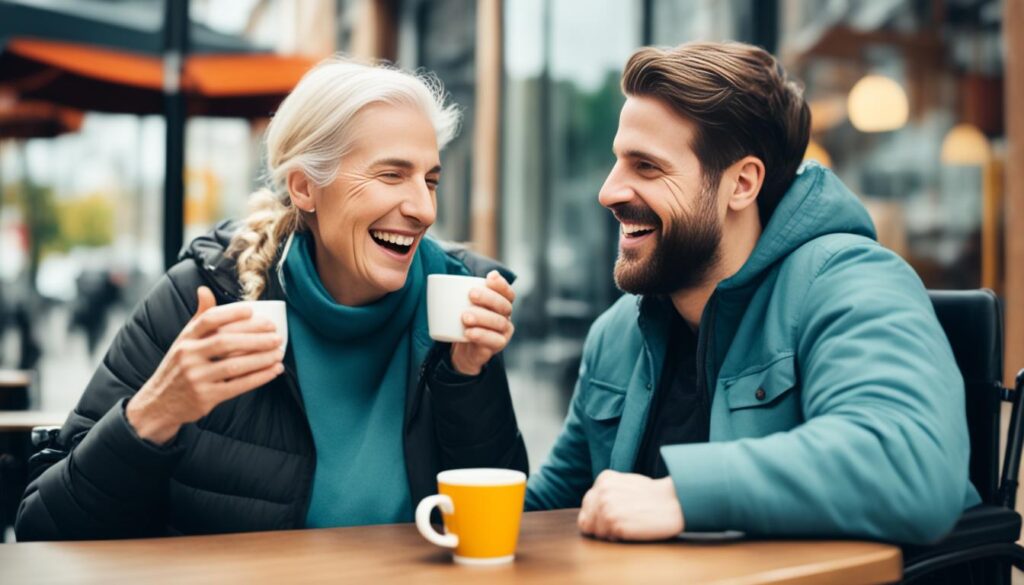
Is it possible to find true love in a world full of misconceptions and social barriers?
For the 61 million adults in the US with a disability, dating can be complex yet rewarding. They often start dating later and are less likely to be married. But, their dating experiences are as varied as they are unique.
Love knows no boundaries, despite societal stigma and misconceptions. People with disabilities build deep connections and fulfilling relationships. Online dating offers new ways to meet potential partners, making it easier to find love.
We’re going to look into dating with a disability and sharing personal stories of love and connection. Love is a universal experience that can overcome physical and mental challenges. Let’s explore the challenges and victories in finding companionship in a world where disability matters more than ever.
Understanding the Challenges of Dating with a Disability
Dating with a disability brings unique dating challenges shaped by deep-rooted societal views and misconceptions. These views greatly affect personal experiences, creating both real and perceived barriers.
Social Perceptions and Stigma
Traditional societal views often portray people with disabilities in a limited way, not valuing their individuality. This leads to a stigma that impacts their lives, including dating. The U.S. Department of Health & Human Services states that 27% of adults in the U.S. have a disability. This highlights the need to change our social perceptions.
Studies from Baylor College of Medicine show women with disabilities often have longer marriages. Yet, the stigma can hide these positive outcomes, making many hesitant about dating.
Breaking Down Misconceptions
It’s crucial to tackle and remove these misconceptions for a more inclusive dating culture. We must promote understanding and acceptance, ensuring disability rights are respected in all social settings. For example, platforms like Eharmony, with its deep psychological matching, show meaningful connections are possible for everyone.
Telling someone about a disability early in dating can help clear up misconceptions. Many say it leads to more attention and connections. In fact, 57% of people with disabilities find long-term relationships or marriage through online dating. This shows that a shift in dating culture towards acceptance can lead to positive outcomes.
We must keep challenging old societal views to reduce the stigma around dating with a disability. Changing these views will improve social attitudes, helping everyone who seeks love and connection. By embracing a more inclusive view, we respect the rights and happiness of all people.
Embracing Self-Disclosure in Dating
Self-disclosure is key in dating, especially when talking about disabilities. Sharing about your disability changes how you connect with others. It builds empathy and understanding, vital for a strong relationship.
When to Disclose Your Disability
Choosing when to share your disability is important. Many worry about being rejected or facing negative reactions early on. It’s a personal choice, balancing comfort with honesty.
Many wait to share until they feel a connection. This lets trust grow before talking about disabilities.
How to Approach Conversations About Your Disability
Talking about your disability needs clear, honest words. Start with empathy, addressing any worries your partner might have. Sharing your story makes it easier for them to understand and accept you.
| Challenges | Approach |
|---|---|
| Fear of Rejection | Emphasise the importance of honesty and mutual understanding early on to set a foundation for the relationship. |
| Timing of Disclosure | Evaluate your comfort level and the evolving connection with your partner to find the right moment for self-disclosure. |
| Empathy and Understanding | Use empathetic communication to ensure your partner is attentive and responsive to your needs. |
Sharing about yourself in dating can make your relationships better. It builds understanding and empathy. Being honest and open sets the stage for a deep and rewarding bond.
Dating Strategies for People with Disabilities
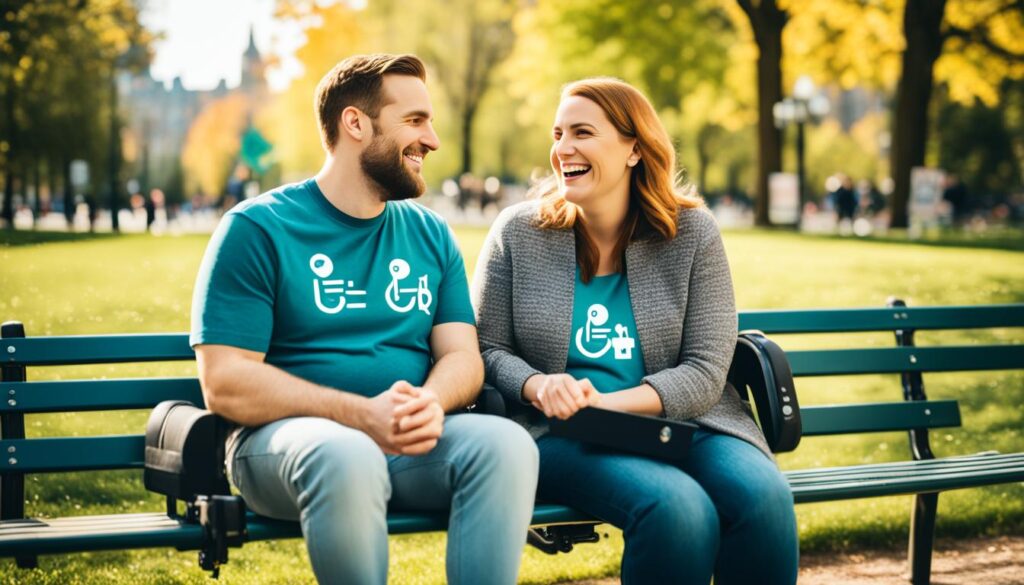
Online dating can be exciting and a bit scary, especially for those with disabilities. Making a real dating profile is key. It should show who you truly are and help you accept yourself. With the right strategies, people with disabilities can feel more confident in online dating.
Building a Genuine Dating Profile
Starting a genuine dating profile means being true to yourself. Here are some tips for a real and meaningful profile:
- Be Honest About Your Disability: It’s important to be open about your disability, whether it’s visible or not. Some people share their disability right away, while others wait until it’s needed. Being honest helps build real connections.
- Highlight Your Interests and Hobbies: Share what makes you happy and fulfilled. Talking about your passions attracts people who share your interests.
- Use Positive Language: Talk about your strengths and what makes you special. Use clear language that respects your experiences. This helps you accept yourself and sets clear expectations for relationships.
- Include Recent Photos: Pictures say a thousand words. Use recent, clear photos to show who you are. Mix solo shots with photos of your hobbies or social life.
Having a good online dating profile can really help you find a meaningful connection. It’s also key to talk about your accessibility needs and what you’re comfortable with.
Talking openly about accessibility can make dating easier. When planning dates, ask your partner or potential matches to think about accessibility. This makes sure both of you have a good time.
Watch out for signs that someone doesn’t care about accessibility or is uncomfortable with your relationship. Knowing about disabilities can help you find a supportive partner.
Creating real dating profiles and talking about what you want from the start can lead to better connections. With the right approach, self-acceptance, and open talk, people with disabilities can do well in online dating.
Navigating Online Dating Platforms
Online dating has changed how we find love. For people with disabilities, knowing about dating apps and their features is key. It helps whether you’re new to online dating or want to improve your experience.
Accessibility in Online Dating Apps
Accessibility is crucial for inclusive online communities. Sites like Dating4Disabled focus on people with disabilities. They let users share their disability status openly. It’s important to look for digital accessibility features like screen readers and voice commands in dating apps.
OkCupid is known for its detailed profiles and inclusive algorithms. It’s a free option, unlike paid sites like Match.com. Users share their personalities and disabilities in their profiles. Serious dating sites have many features to help everyone, including those with disabilities, connect.
Choosing the Right Platform for You
Choosing the best dating platform depends on what you prefer and your disability needs. Some like mainstream dating apps, while others prefer sites made for the disability community. Think about these points when picking your platform:
- Think about how open you want to be about your disability.
- Look at the app’s accessibility features.
- Try joining several sites to increase your chances of finding someone.
- See if the community shares your values and interests.
Being true to yourself on your profile is important. Use at least two photos and talk about your disability to attract the right people. Good first messages can lead to better conversations.
Dealing with fewer messages or harassment is hard, but finding supportive communities helps. Be confident on these platforms and be open to meeting people in person when you’re ready. Always put safety and comfort first, starting with public first dates can make things easier.
| Platform | Key Feature |
|---|---|
| OkCupid | Detailed profiles and inclusive algorithms |
| Dating4Disabled | Dedicated to the disability community |
| Match.com | Comprehensive paid service |
First Date Tips and Etiquette

Going on a first date can be nerve-wracking, especially with a disability. But, with the right mindset, it can be a great experience. Here are some tips and etiquette to help you feel confident and true to yourself on your first date.
Preparing for Your First Date
Being prepared is key to making a good impression. Think about these points:
- Choose an Accessible Location: Make sure the place is easy to get to and comfortable for both of you.
- Plan for Extra Time: Add extra time for travel to avoid being late due to unexpected delays.
- Budget Wisely: Plan your spending on travel, dinner, and activities to avoid stress later.
- Disclose Your Disability: It’s good to be open about how your disability affects your daily life to avoid misunderstandings.
Staying True to Yourself
Being true to yourself is key to a real connection. Here are some tips:
- Boost Your Self-Esteem: Go into the date feeling confident and positive. Your worth isn’t tied to your disability.
- Communicate Openly: Be open but also set boundaries if someone asks too many personal questions. You control the conversation.
- Address Relationship Challenges: If a date doesn’t work out because of your disability, it doesn’t mean you’re not worthy. Keep looking for someone who values you fully.
- Follow Dating Norms: Talking before the date, via phone or video, can help make sure you both know what to expect. It builds respect.
Always put your comfort and happiness first. Ellie says being happy in a relationship is key, despite the challenges. By following these tips and being polite, you can have positive and meaningful dates.
| Tip | Details |
|---|---|
| Accessible Location | Pick a spot that’s easy to get to and has what you need. |
| Time Management | Plan for extra time to travel to avoid being late. |
| Financial Planning | Set a budget for travel, dinner, and fun to stay calm. |
| Disclosure | Be clear about how your disability impacts your day without sharing too much. |
| Maintain Self-Esteem | Start the date feeling confident and positive, focusing on your self-worth. |
With these tips, your first date can be a step towards finding love and connection. It can be based on respect and understanding.
Fostering Emotional and Physical Intimacy

Building emotional and physical closeness in relationships with disabilities needs careful thought. By tackling intimacy issues and building trust, couples can grow their emotional bond and improve their sexual life. This is true even with dating barriers.
Building Trust and Connection
Trust is key to emotional closeness. Good communication is vital for emotional intimacy. It requires patience and understanding from both sides. Setting clear boundaries helps create respect and makes both feel safe and valued.
Empathy is a strong tool for trust and connection. By seeing things from our partner’s point of view, we support them better. Sharing stories and making memories together strengthens the bond between partners.
Self-care is crucial for a healthy relationship. For couples with disabilities, self-care can boost emotional closeness. Changing or adapting dates to fit disabilities makes sure both enjoy the time together.
Navigating Intimacy Challenges
Overcoming intimacy challenges is tough but key to a strong relationship. Couples with disabilities might need more help and planning in their daily lives. It’s important to thank each other for the support and care given.
Flirting and having fun together can increase intimacy. It helps couples feel more at ease and happy with each other. Even with busy lives, setting times for dates can reduce stress and deepen emotional closeness. Having a date once or twice a month can really help.
But, dating can be hard if you face physical barriers. Couples should plan dates that work for everyone, making sure places are easy to get to and comfy for both. This way, they can keep building a strong emotional bond and a satisfying sexual life.
| Strategies | Impact |
|---|---|
| Effective Communication | Enhances emotional intimacy |
| Setting Clear Boundaries | Promotes respect and trust |
| Empathy | Strengthens emotional connection |
| Self-Care | Positively affects relationship dynamics |
| Adapting Date Activities | Maintains intimacy despite barriers |
| Regular Dates | Relieves stress and enhances intimacy |
Exploring Success Stories and Personal Narratives
Sharing success stories and personal tales of love and partnership among people with disabilities is powerful. It offers encouragement and practical advice. These real-life stories of dating success and overcoming challenges are a beacon of hope for those in love and relationships.
Inspiring Stories of Love and Partnership
Finding love can seem tough, but many success stories show it’s possible. Erin Hawley, for example, tried online dating sites for people with disabilities and general ones too. She learned the value of patience and resilience.
Anita and Abraham, both on the autism spectrum, have a touching love story. They show how understanding and partnership can lead to success in dating. Elizabeth Wampler and Steve’s relationship also highlights the power of humour and honesty in overcoming challenges, even with cerebral palsy.
Overcoming Dating Barriers
Many personal stories talk about overcoming barriers. Maurice Snell, with ASD, shares his love and relationship journey, offering valuable advice. Chad Cunningham tells how he faced his fears and found love in his 20s. These stories teach us how to beat personal doubts and societal misconceptions.
Amy Taklif gives tips on making a first date memorable, while Dr. Sheypuk, a clinical psychologist, offers professional advice. Their insights help guide those looking for dating success.
Bridget and George’s story, from their first date to their wedding, shows how love and support can conquer all. Palmer Harston Williams also shares creative ideas for a wheelchair-accessible wedding. These stories prove that with creativity, we can overcome any barrier.
These personal stories weave a rich tapestry of experiences. They show that love has no limits. By embracing these success stories, we gain inspiration and practical advice for dating with confidence and grace.
Supporting Your Partner with a Disability
When you’re in a relationship with someone who has a disability, it’s key to be understanding and empathetic. Showing respect, talking openly, and wanting to make your relationship inclusive can really help. This makes caring for each other better.
Understanding Their Needs
It’s important to know what your partner needs without focusing too much on their disability. For me, having control over my disability helps me stay independent. But, my partner’s support and understanding are crucial too. It’s important not to make the disability the main thing, but to accept and work with it.
Planning activities should take into account our physical limits. Talking openly helps us figure out what we can do. With about 1 in 4 adults in the US having a disability, having good support is key. It’s also important to fight against wrong ideas that say disabled people are always lonely or can’t find partners.
Creating an Inclusive Relationship
To make a relationship inclusive, both partners should feel respected and valued. Learning to drop wrong ideas and assumptions helps a lot. Working together is important; non-disabled partners should be ready to change plans, help out quickly, and listen well.
In our relationship, we share tasks based on what we can do, what we like, and how much time and energy we have. Planning dates or making places accessible takes careful planning. Noor Pervez, a community organiser, says talking openly is key to understanding each other better and giving the support needed.
Here’s a glance at how we manage our relationship:
| Aspect | Care Dynamics |
|---|---|
| Communication | Talking honestly and regularly about what we need and can do. |
| Planning Activities | Choosing activities together, keeping in mind our physical limits. |
| Supporting Each Other | Adjusting our roles responsibly, like Noor Pervez suggests in his advocacy work. |
| Emotional Support | Being empathetic and understanding, especially when things get tough. |
| Relationship Visibility | Sharing our relationship with friends and family, showing it’s valued. |
In conclusion, supporting a partner with a disability means paying close attention to their needs, building inclusive relationships, and being empathetic in all care dynamics. With dedicated partner support, these relationships can do well, challenging wrong ideas and building a strong base for growth and happiness together.
Conclusion
Looking back at our journey in dating with a disability, we see it’s about challenging norms and building empathy. Over fifty years, we’ve seen new theories and models. They help us understand how disability affects our lives, relationships, and how others see us.
It’s important to know the challenges people with disabilities face in dating. By being open, using accessible online dating, and talking openly, we move towards accepting relationships. Stories of success show love and friendship are possible with understanding and empathy. Support from others is key to a welcoming dating world.
Accepting diversity and inclusion in dating is essential. A supportive community plays a big part. By being inclusive and offering support, we make the world fairer. Everyone deserves to find love and friendship. Let’s keep pushing for empathy, understanding, and support in our quest for connection and love.


